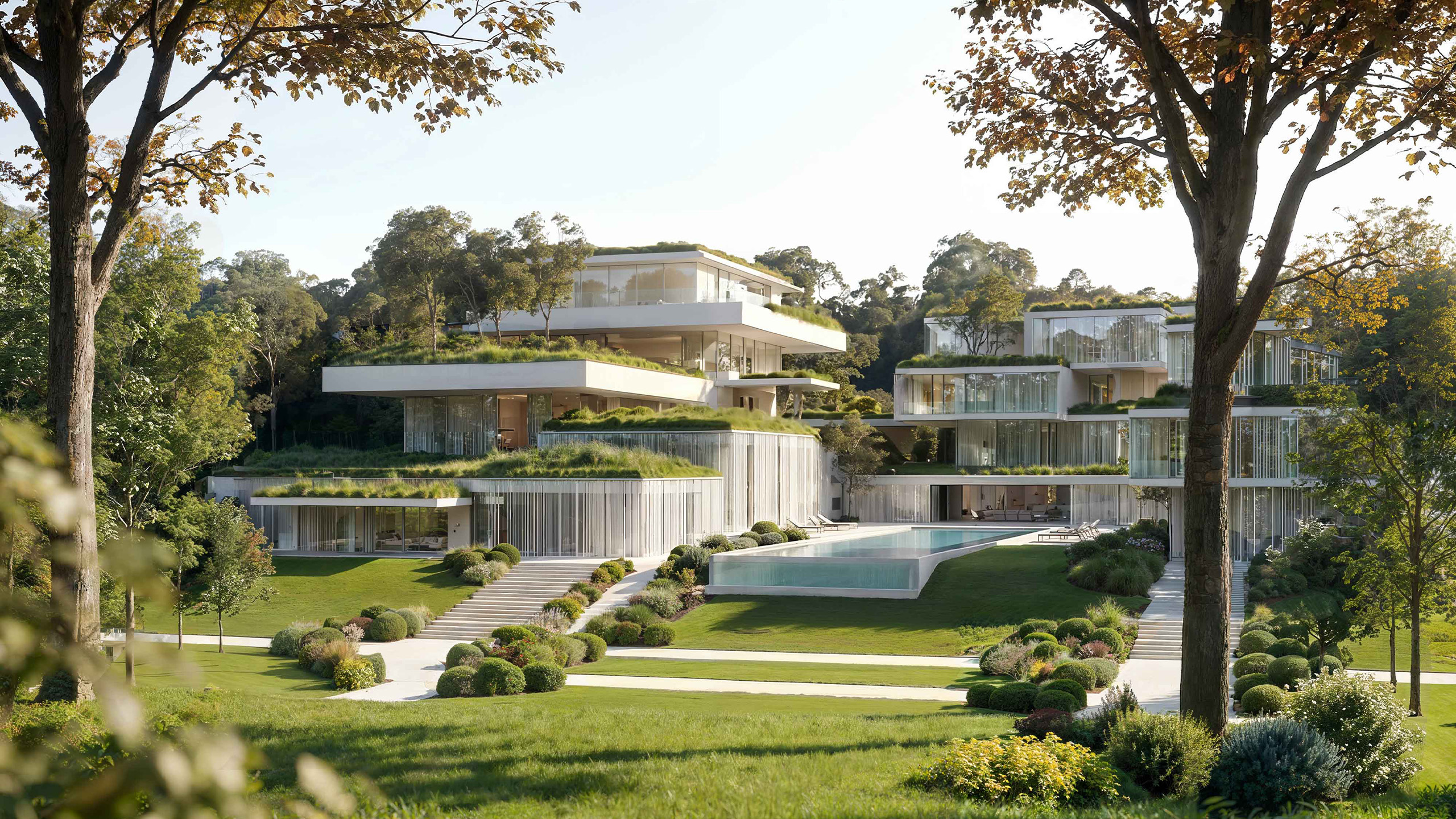
Layered Ground – Residential Landscape in Lucerne, Switzerland
Residential
Undisclosed
Potiropoulos+Partners
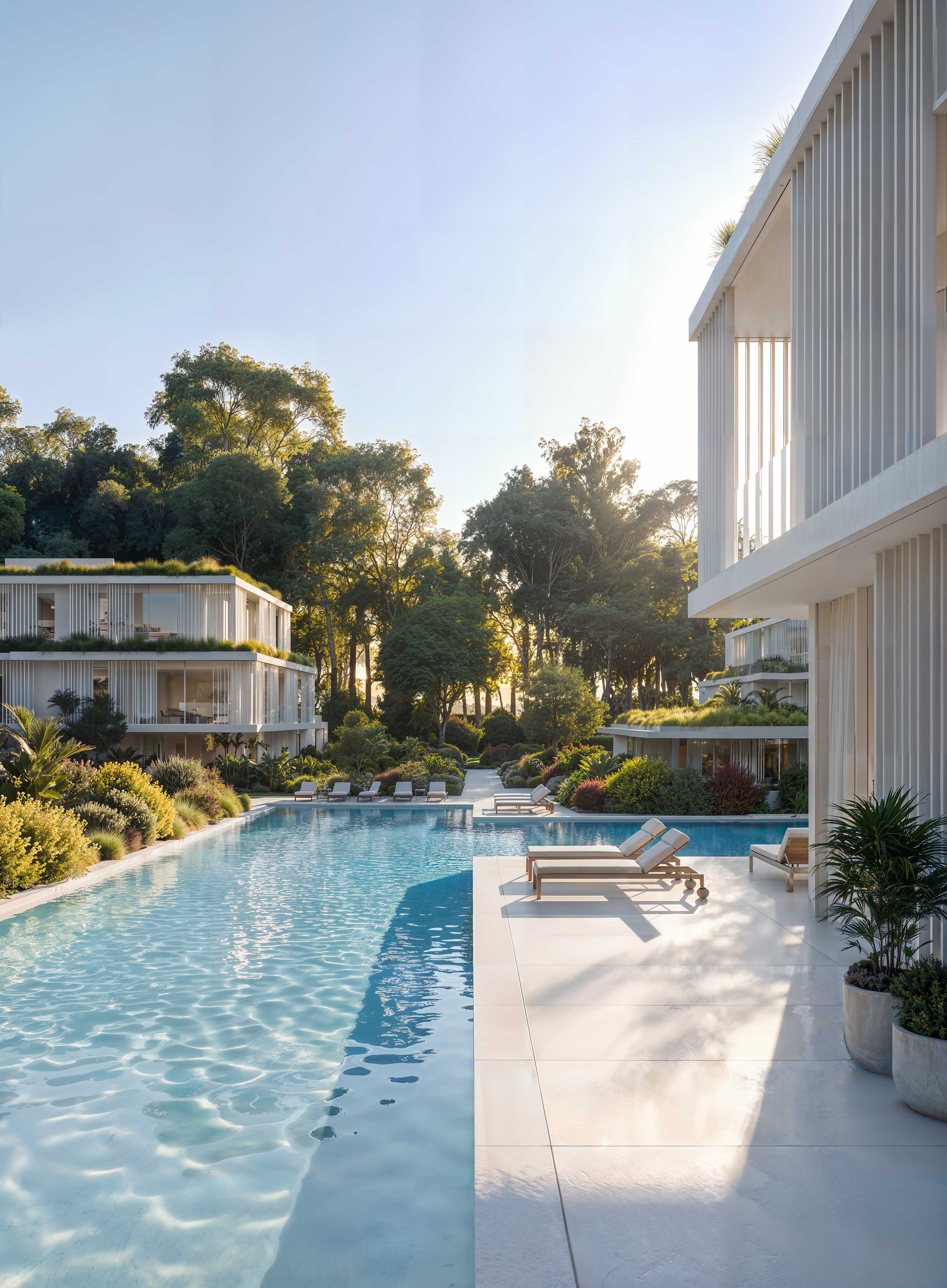
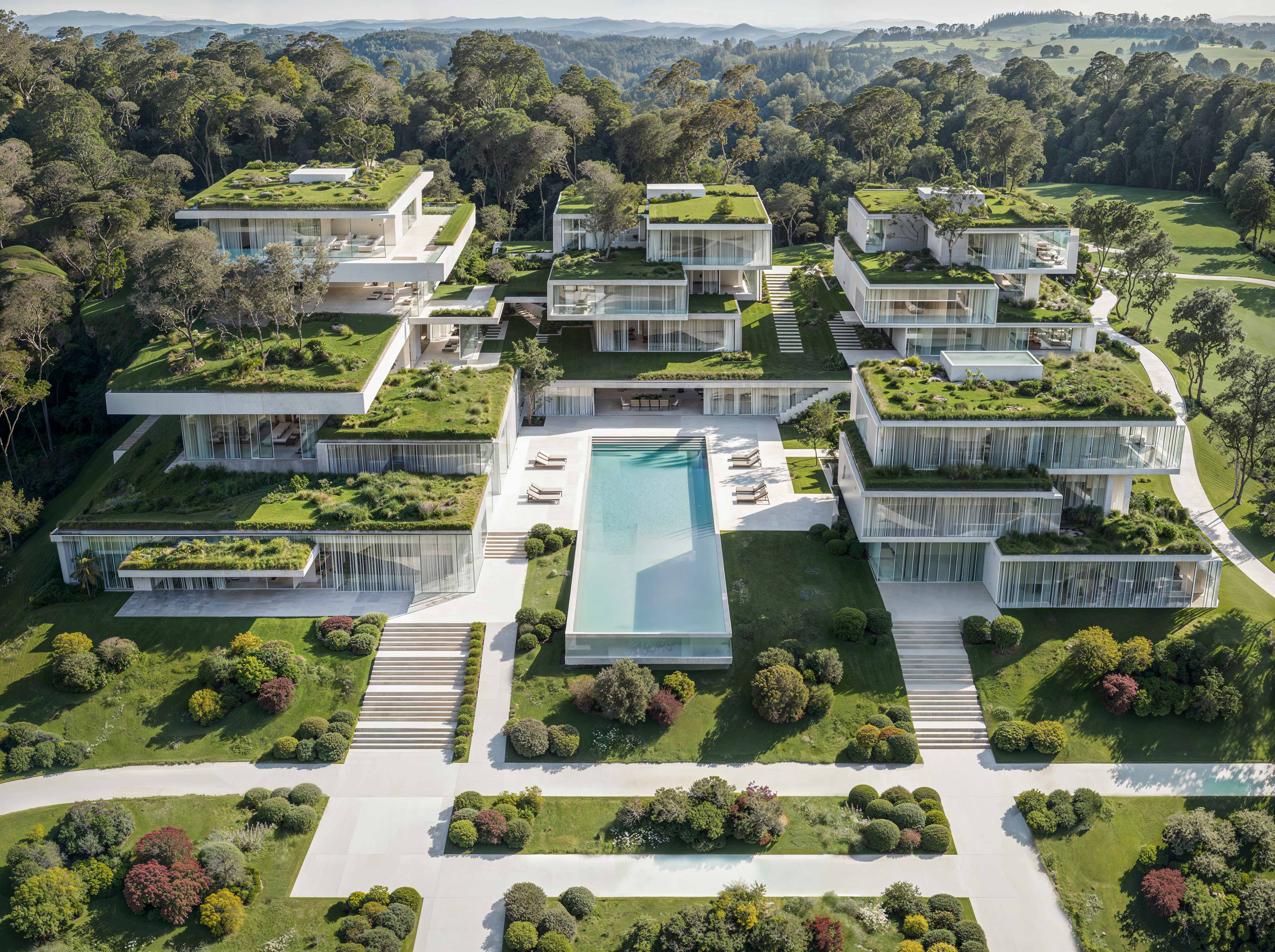
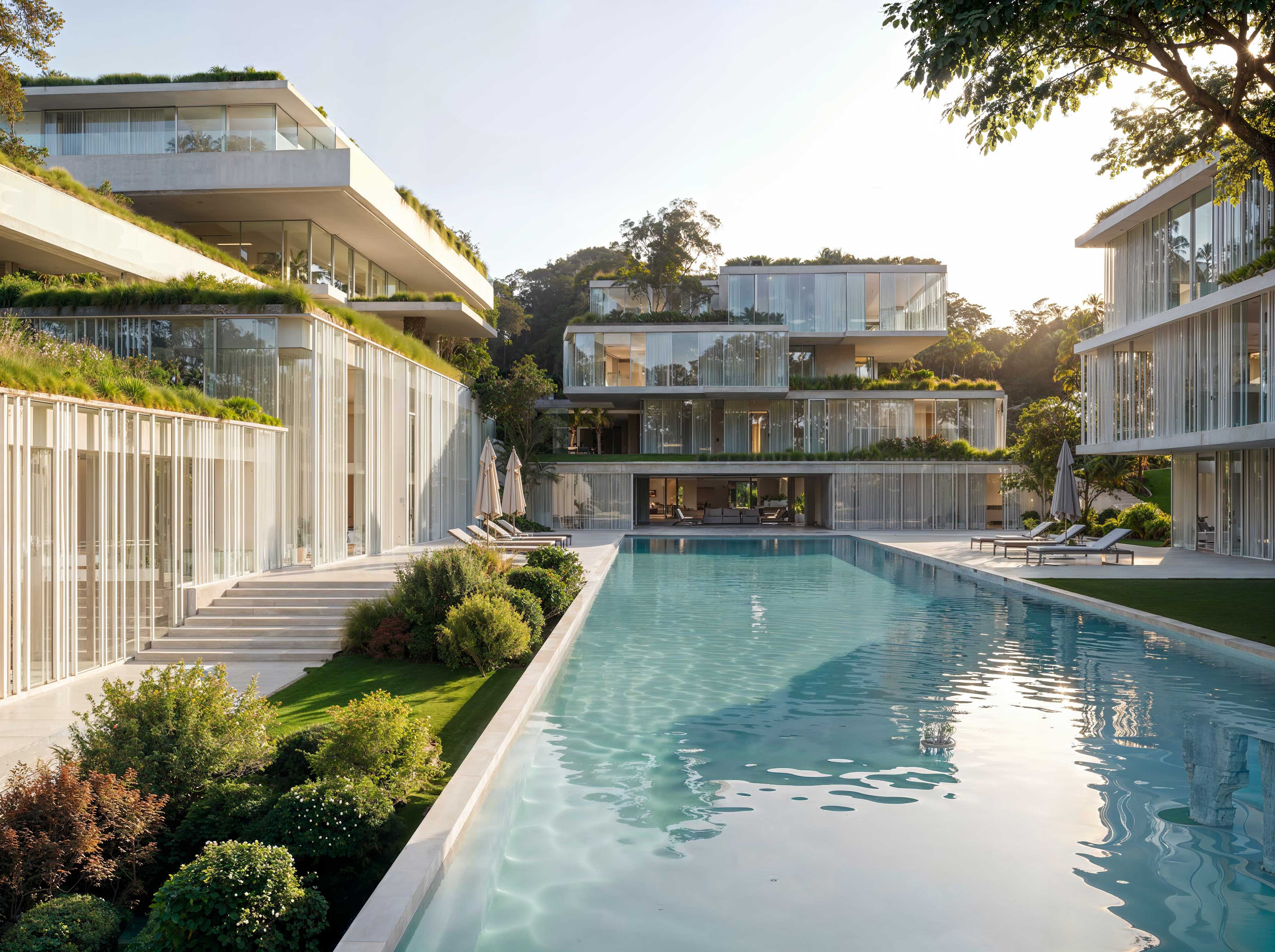
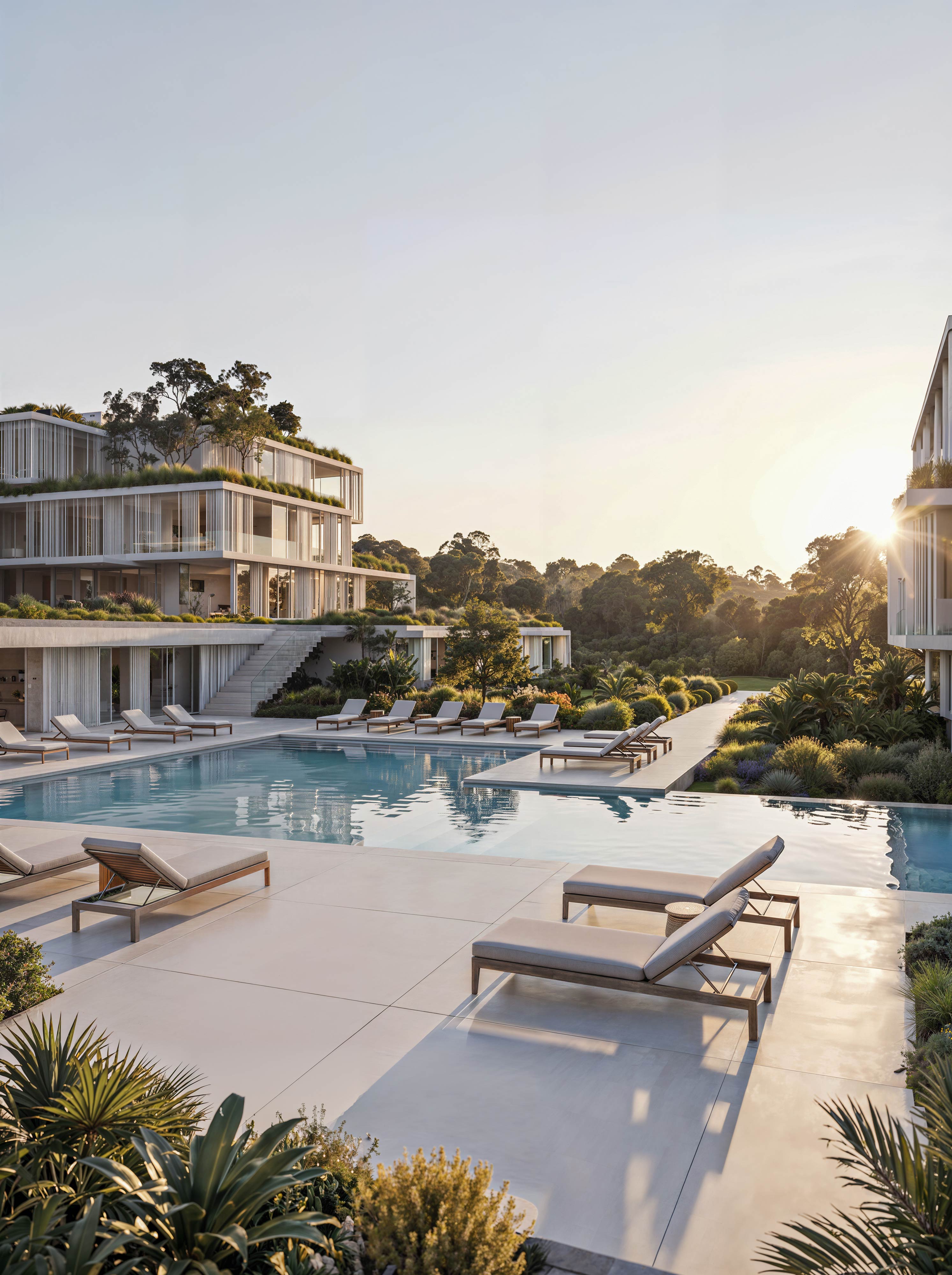
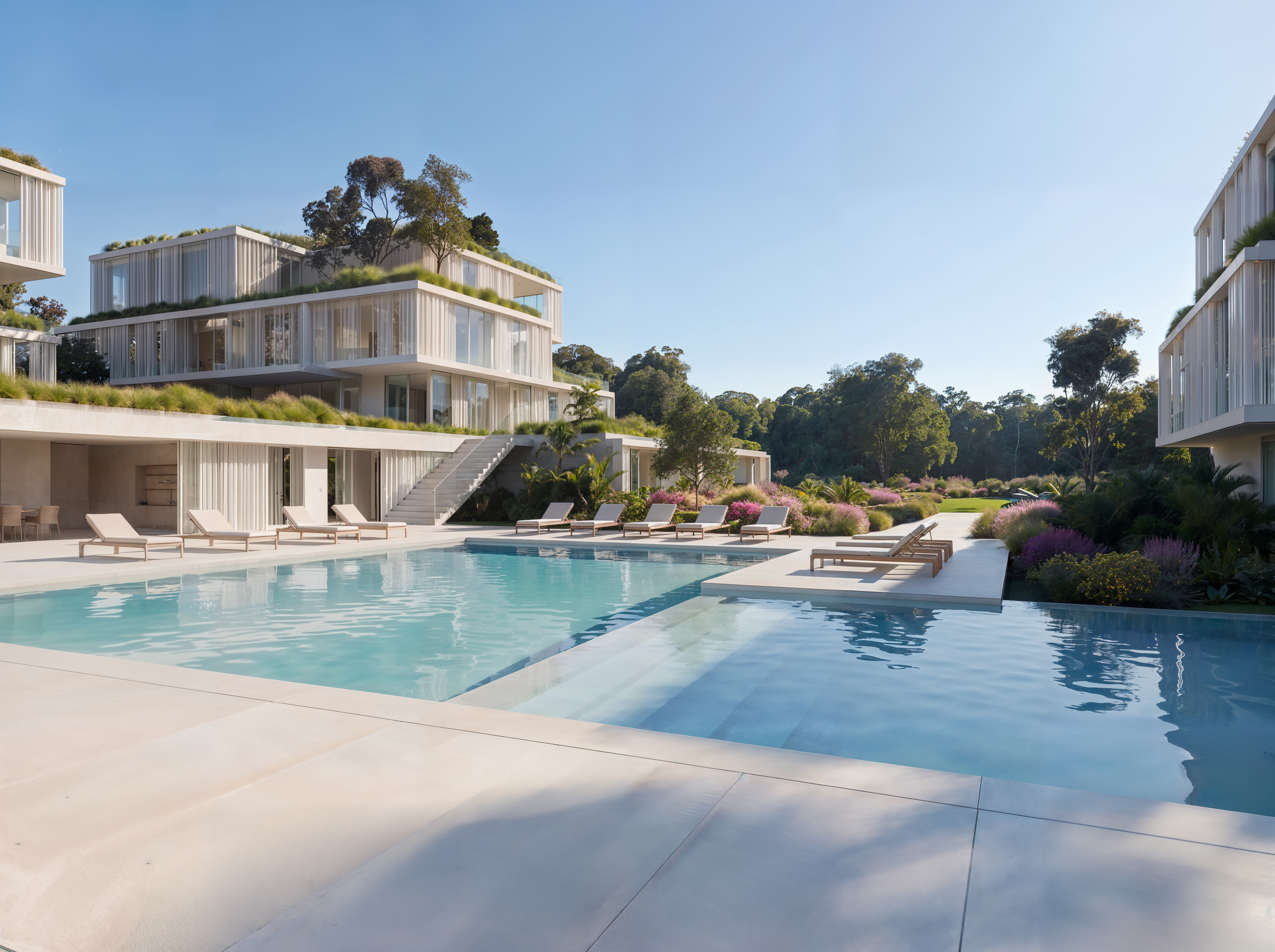
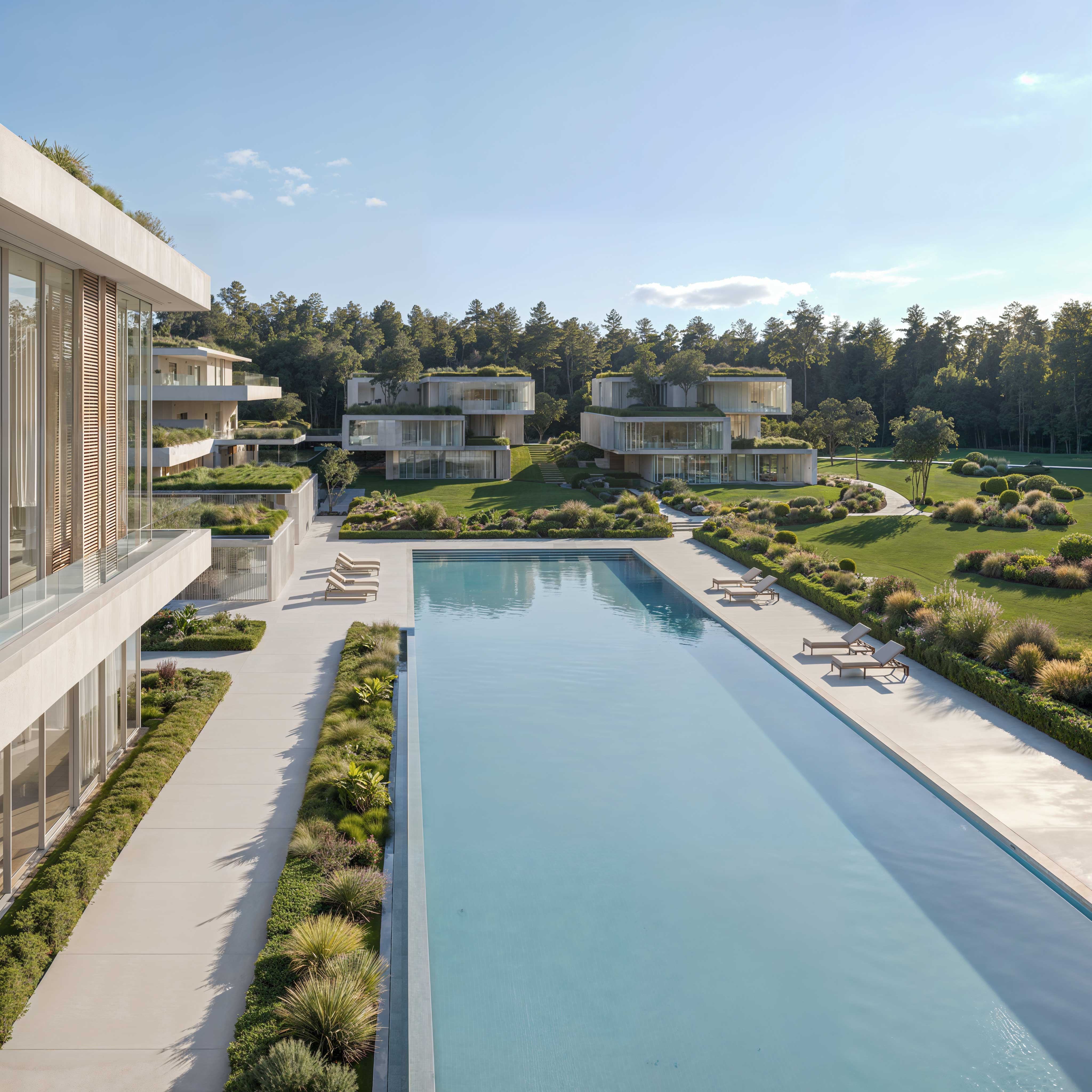
The fundamental design principle for the composition was the conception of the residential complex as a coherent landscape-event. In the proposal, architecture is not defined as an autonomous object, but rather as a topological expression of a broader environmental condition. “Layered Ground” is embedded in its natural setting through a logic of continuity and interaction, where the ground, nature, and functional and visual flows form a coherent “base“ upon which habitation unfolds. This approach allows for the formation of a residential fabric that approaches more closely the notion of an “inhabited landscape” rather than that of isolated residential clusters. Its spatial organization is structured around the elongated central pool, which operates as the fixed compositional and perceptual axis — its presence surpasses mere functionality, proposing instead a node of reference and collective experience.
The units are arranged around the perimeter of the pool, forming a series of volumes and horizontal planes that follow a dual logic: it functions as a unified system while simultaneously granting each unit spatial autonomy. This organization seeks to create a flexible complex that balances collectivity and privacy, extroversion and introversion. The boundaries between the individual units are not treated in the composition as rigid dividing lines, but rather as indirect spatial suggestions. The visual openings and intersecting relationships that develop between the buildings reinforce the sense of continuity without negotiating privacy.
The volumetric massing logic of “Layered Ground” is shaped through a stratification of shifts. The horizontal surfaces detach from an initial conceptual state and shift vertically and horizontally, forming a system of successive layers that generates projections, recesses, and intermediate zones. These surfaces function as active fields of habitation, accommodating private terraces, planted areas, and communal spaces, thereby creating a continuous network of uses and spatial transformations. This tectonic approach aims to accentuate a multisensory spatial experience with multiple readings, in which the concept of dwelling extends beyond the limits of enclosed spaces and diffuses into the landscape.
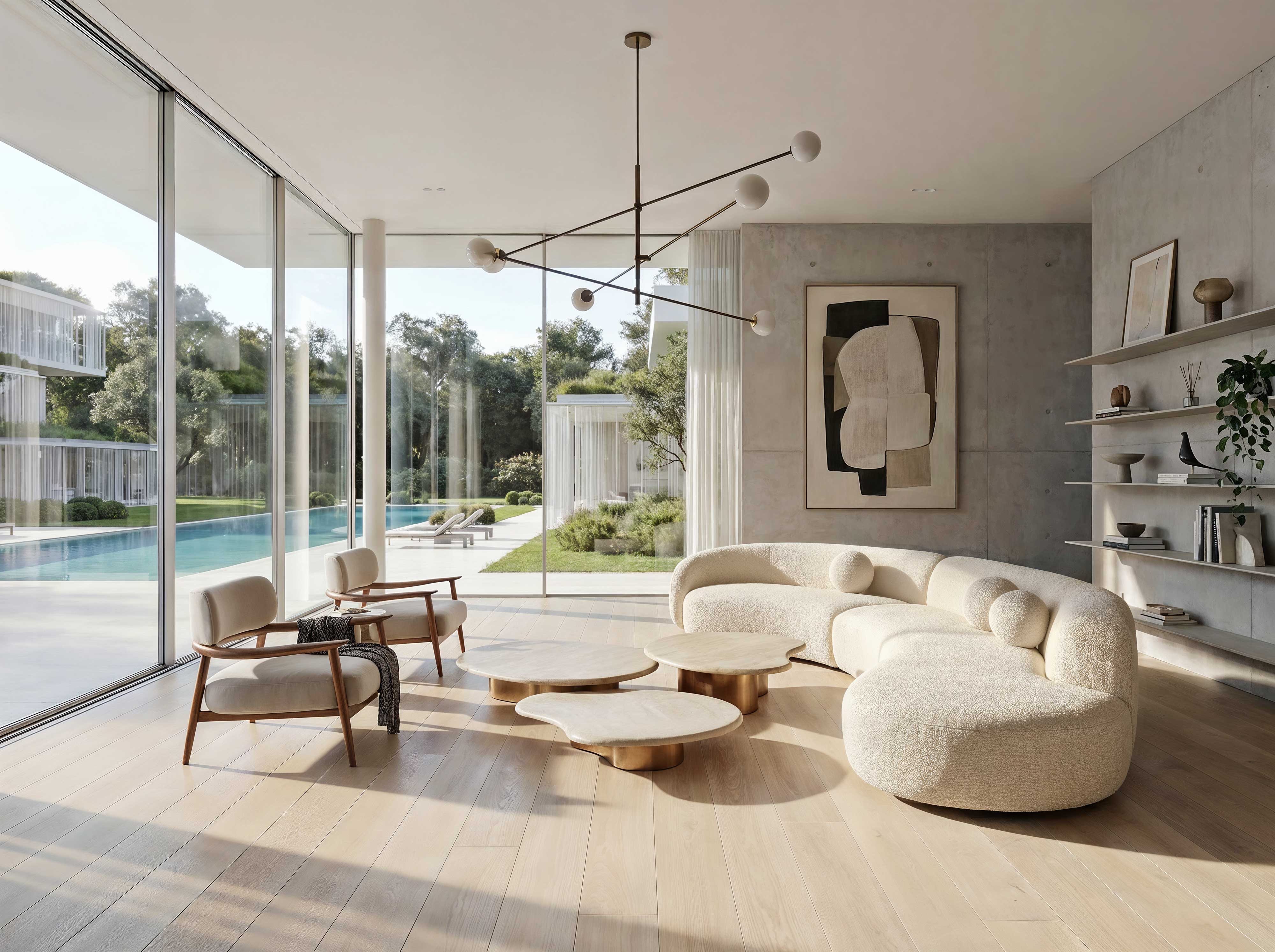
The desired privacy is achieved through an approach of gradual progression rather than through absolute boundaries. A secondary external skin — composed of vertical elements overlaying the glazed façade surfaces — functions as a porous membrane: it regulates the penetration of light, visual permeability, and the degree of exposure, while its varying density allows for differentiated degrees of privacy. The same surface introduces rhythm to the façades and mitigates the reflectivity of the glazing.
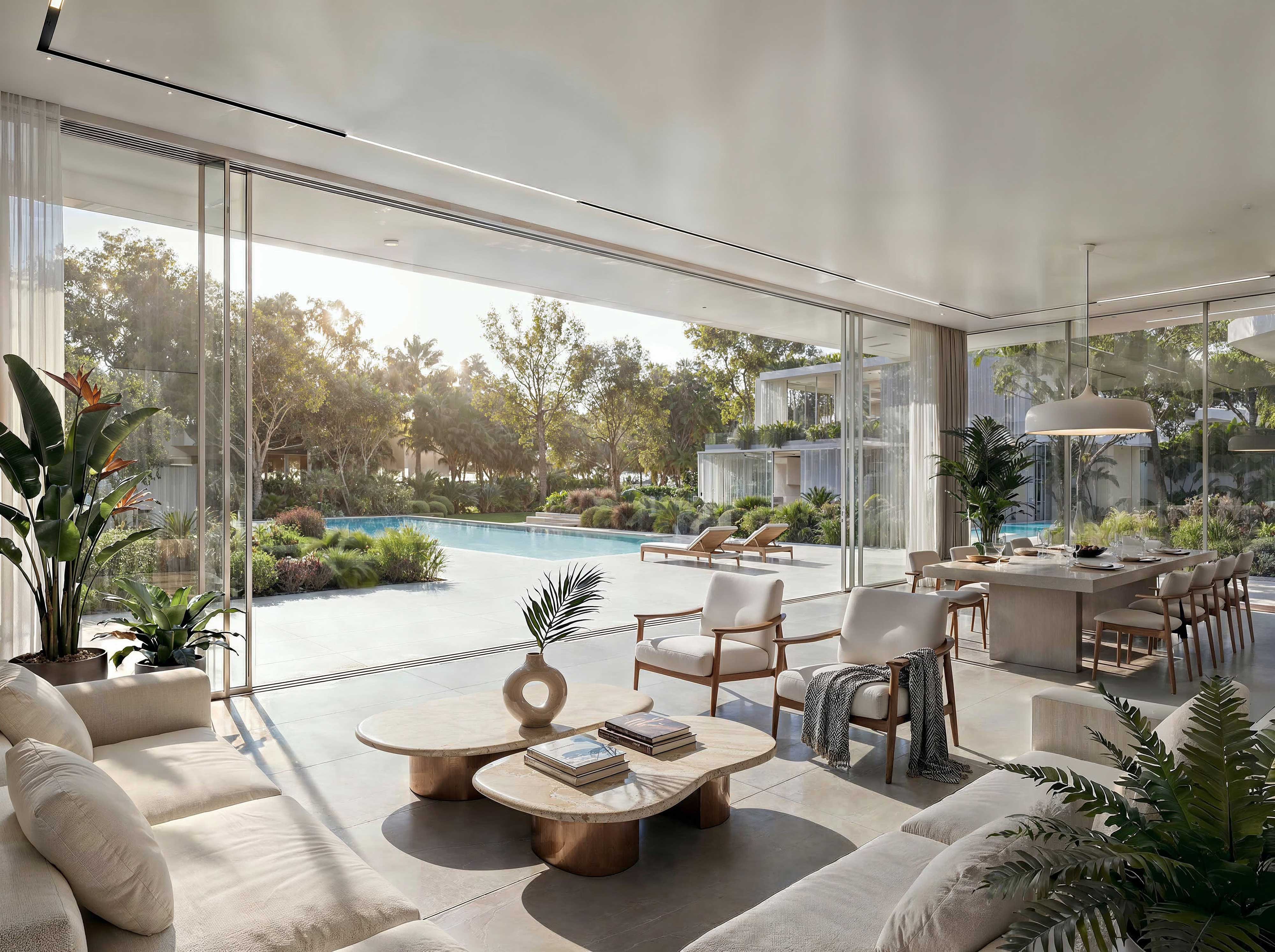
A defining aspect of the design was the treatment of the threshold between interior and exterior spaces as a transitional zone rather than a line of separation. The extensive external openings allow for continuous visual contact with the surrounding environment, while the spatial fluidity between the “inside” and the “outside” establishes a unified field of living. Architecture here operates as a mediating mechanism, rendering the landscape an inseparable part of the overall experience.
In the proposed design, nature is integrated as a fundamental component of the composition. The planted roofs and green surfaces develop across multiple levels, softening the boundaries between the natural and the artificial while extending the landscape into the complex itself. As a whole, “Layered Ground” is conceived as an interactive system of spatial interdependencies between architecture, landscape, and habitation, in which none of the three components dominates the others. The final form is not imposed as a predetermined “image,” but rather emerges as the result of the internal relationships, tendencies, and dynamics that evolve within the system.